
Overview
Large rooms are hard to hear in. A lecture hall or a reading room can hold a big group, but the moment a session goes hybrid, most of that group falls silent. Remote attendees hear the presenter clearly. They hear nobody else.
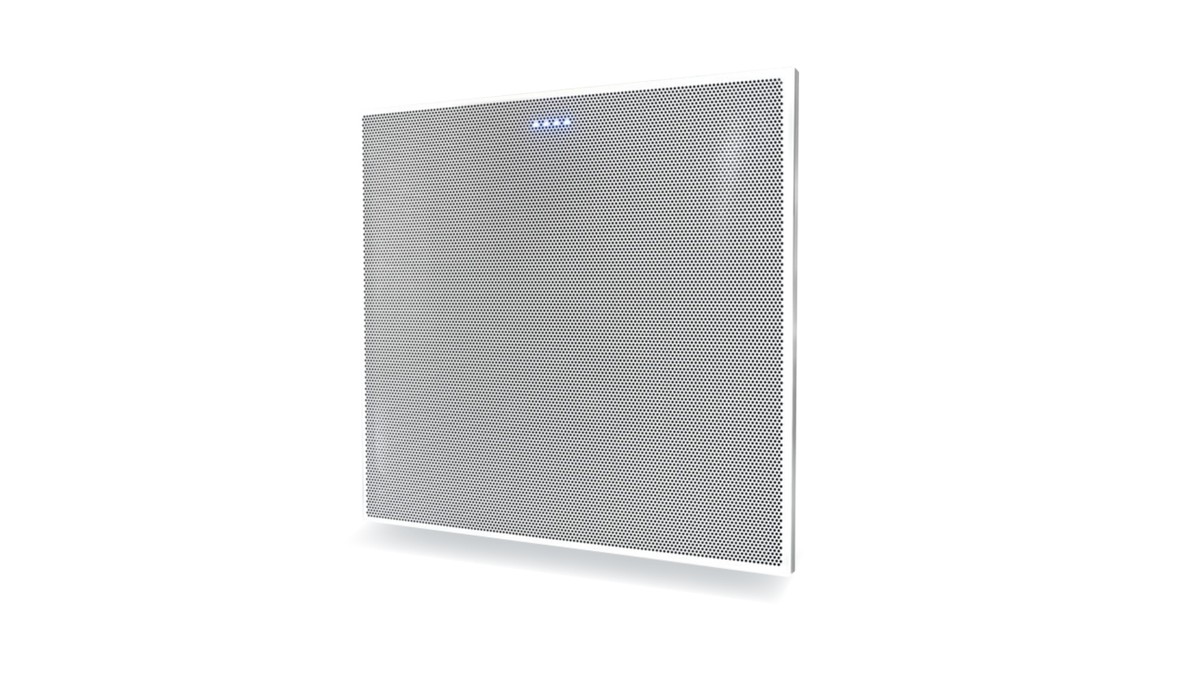
Michigan Technological University solved this in two of its largest spaces. The university installed six ClearOne BMA 360 beamforming microphone array ceiling tiles. Three went into the DOW 642 lecture hall. Three went into the library’s East Reading Room, a multi-purpose space of roughly 465 square metres. Both rooms now pick up any voice in any seat, with nobody touching a microphone.
Audio Visual Distributors (AVD) is the authorised distributor for ClearOne in Australia and New Zealand. Local integrators can build the same design into lecture theatres, council chambers, training rooms and large meeting spaces.
The Challenge: Two Big Rooms That Could Not Go Hybrid
Michigan Tech had the rooms. It did not have the audio to match them.
- Remote participants could only hear the presenter. Anyone speaking from a seat was inaudible on the call. Virtual sessions ran one way, which turned discussion into broadcast.
- Microphones had to be passed around. Covering a large room meant handing a microphone from person to person. That slows a session down. It also discourages people from speaking at all.
- Staff time was tied up running the room. Student tech associates were rostered on to set up and operate the AV. A room that needs an operator is a room people hesitate to book.
- Distance defeats conventional microphones. In a space this size, table and gooseneck microphones only serve the people sitting beside them. Pickup falls away quickly as distance grows.
- The spaces were underused. The East Reading Room offers roughly 465 square metres of flexible floor. Without room-wide audio it could not properly host recorded sessions, guest speakers or hybrid collaboration.
The Solution: Room-Wide Pickup from the Ceiling Grid
Michigan Tech chose ceiling tile beamforming arrays. The microphones sit in the ceiling grid itself. Nothing sits on the tables, and nothing gets passed between people.
Products Deployed
| Space | Product | Quantity | Function |
|---|---|---|---|
| DOW 642 lecture hall | ClearOne BMA 360 Beamforming Microphone Array Ceiling Tile | 3 | Wall to wall microphone coverage of the lecture hall, so questions and comments from any seat reach both the room and remote attendees. |
| Library East Reading Room (roughly 465 square metres) | ClearOne BMA 360 Beamforming Microphone Array Ceiling Tile | 3 | Room-wide pickup across a large multi-purpose space used for guest speakers, collaboration and recorded sessions. |
How It Works
Beamforming covers the whole room. The BMA 360 forms multiple simultaneous beams across the space. It can be set to 6, 8, 10, 11 or 12 beams, with room patterns for full circle and square layouts, rectangular layouts, and semi-circle or classroom layouts. ClearOne CONSOLE AI software configures it for rooms from about 3 by 3 metres up to about 11 by 6 metres, with ceiling heights from roughly 2.1 to 6 metres.
Voice Lift keeps the room audible to itself. Voice Lift reinforces a talker’s voice through the room’s own loudspeakers, so people at the back hear people at the front. ClearOne states that combining its beamforming and feedback cancellation technologies delivers up to a 20 dB boost in gain before feedback compared to an omnidirectional microphone. That headroom is what makes reinforcement practical in a big room.
Processing happens on the tile. Acoustic echo cancellation, noise reduction, filtering and automatic level control all run onboard. There is no need for a separate DSP channel per beam, which keeps the rack and the configuration simple.
Ambient noise gets rejected. ClearOne VividVoice processing combines FiBeam, DsBeam, Voice Lift and 6G acoustic echo cancellation. DsBeam, the deep sidelobe beamforming element, pushes sidelobes below minus 40 dB. That rejects reverberation and room noise, which matters in hard-surfaced halls and reading rooms.
Amplification is built in. Each tile carries onboard power amplifiers. They can be configured as 4 by 15 watt outputs or 2 by 30 watt outputs, which can remove the need for a separate amplifier in smaller designs.
Three tiles cover one large room. Up to three ceiling tiles daisy-chain over P-Link. That is the design Michigan Tech used in each of its two spaces.
It fits the ceiling you already have. Versions suit 24 inch, 600 mm and 625 mm ceiling grids. A VESA mount hole pattern supports pole mounting, and hard ceiling adapter kits are available for rooms without a grid.
Key Outcomes and Results
- Every seat became a microphone position. “The ClearOne BMA 360 ceiling tile microphones immediately transformed how each space could be used,” says David Chard, Director of Media Technology Services at Michigan Technological University. He describes the result as “clear, crisp audio pickup of any voice in any seat”.
- The rooms run without an operator. The university no longer needs student tech associates rostered on to set up and run these spaces.
- Hybrid sessions became two-way. Remote attendees can hear people speaking from anywhere in the room, so discussion works in both directions.
- Two spaces became genuinely multi-purpose. Both rooms now support guest speakers, recorded sessions and collaborative work alongside standard teaching.
- The university expanded the design. After seeing the results in these two rooms, Michigan Tech planned further installations in other classrooms.
The library team saw the same value. David Holden, who manages technology in the library, describes the goal as technology that can “empower students to capture, record and present as dynamically as possible”.
Why ClearOne BMA 360 for Lecture Theatres and Large Meeting Spaces
- Room-wide pickup without table clutter. The microphones live in the ceiling. Tables stay clear, cabling stays hidden, and there is nothing for users to move or misplace.
- One tile design scales to bigger rooms. Daisy-chaining up to three tiles over P-Link means the same product covers a small meeting room or a large hall. Quoting and installing stay predictable.
- Onboard DSP simplifies the rack. Echo cancellation, noise reduction and level control run on the tile, so beam count does not drive up outboard DSP requirements.
- Voice Lift serves the people in the room. Many conferencing systems only optimise the far end. Voice Lift also fixes intelligibility for the audience sitting in the space.
- Analogue or Dante to suit the design. The BMA 360D is the Dante enabled version and works with any Dante enabled DSP mixer, which keeps the array usable in networked audio designs.
- Fits standard ceiling grids. Options for 24 inch, 600 mm and 625 mm grids, plus pole and hard ceiling mounting, cover most Australian and New Zealand building types.
Partner With AVD
Audio Visual Distributors (AVD) is the authorised distributor for ClearOne across Australia and New Zealand. Whether you are designing AV for lecture theatres, council chambers, training rooms, boardrooms or any large space where every voice needs to be heard, AVD provides local stock, technical support and project consultation.
Contact the AVD team to discuss ClearOne BMA 360 microphone solutions for your next education or corporate AV project.